One Goal - Many Voices. Writing with 2030 in mind, representatives of civil society organizations, experts from science and research, business partners and individuals who are particularly committed to the issue are active in the fight against hunger. The exchange of ideas regarding the magazine's main focus is on the diversity of the participants.
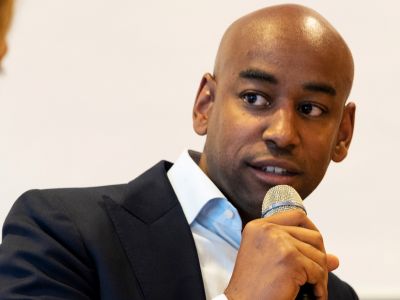
Jehiel Oliver is responsible for the overall management and strategy of Hello Tractor, an agricultural technology company that connects tractor owners and farmers through a farm equipment sharing application. He has been honored with numerous awards for his work in social entrepreneurship including being recognized by Foreign Policy Magazine as a Top 100 Global Thinker for 2016. He was appointed under the Obama Administration as a member of the President’s Advisory Council on Doing Business in Africa, where he chaired the technology subcommittee. Prior to Hello Tractor, Oliver worked in consulting and investment banking. He studied economics at both the undergraduate and graduate levels at Florida A&M University and Cornell University, respectively.
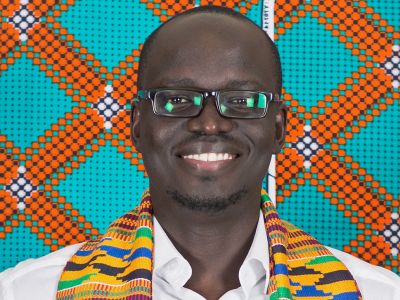
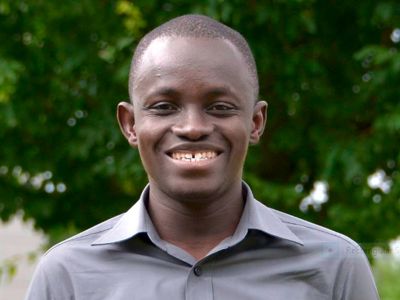
Solomon King Benge is the founder of Fundi Bots, an education non-profit with a mission to accelerate science learning in Africa. Fundi Bots uses high-impact learning tools like robotics and enhanced science curriculum material to promote better learning outcomes, improved career prospects and real-world technological advancement in African schools and communities.
In addition, he is a 2014 Echoing Green Fellow, 2014 Ashoka Fellow and a 2017, Segal Family Foundation African Visionary Fellow.
Solomon also enjoys art and storytelling through various media.
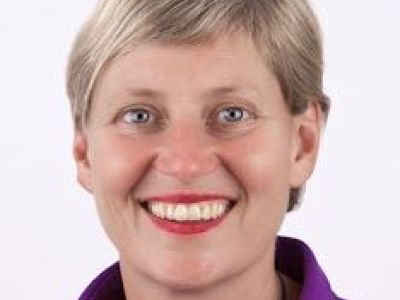
Sue Cant provides technical advisory for World Vision’s social accountability programs, now scaled to 715 sites across 47 countries. Sue has more than 12 years experience working in policy, programming and sub-national governance in Africa, Asia and the Pacific. She has previously worked as a democratic governance adviser on an Australian Government program in Papua New Guinea and as an M&E specialist. She holds a Master in Evaluation of social accountability interventions from the University of Melbourne, Australia.
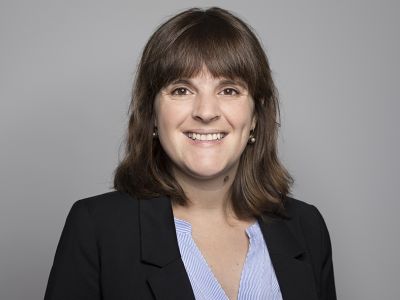
Anna Sophia Rainer has been Africa Advisor for the German Agribusiness Alliance, an initiative of leading associations and companies in the agricultural and food industries, since 2018. In this function she is seconded to the Afrika-Verein der deutschen Wirtschaft where she is responsible for all topics relating to agriculture and the food industry. Previously, she worked for the Afrika-Verein as a project officer for northern and western Africa. Ms. Rainer studied African Science in Leipzig, Naples and Dar Es Saalam and spent some time in Uganda and China during her studies.
Tanja Reith is a solution manager for the Agribusiness vertical in the SAP Industries organization. She has over 20 years of experience in go-to-market and solution management roles for enterprise software, engaging closely with customers and partners across different industries such as agribusiness, consumer products, and financial services. Tanja’s ambition is to drive shared value resulting in business value to our customers while making a social impact and improving people’s lives.
Dr. Essa Chanie Mussa is Assistant Professor at the University of Gondar. He holds a PhD in agricultural and development economics from the Center for Development Research at the University of Bonn. In addition, he works as a research analyst for the UNICEF Office for Research - Innocenti, Social and Economic Policy in a project to build an integrated safety net for the most vulnerable women and children in rural and urban Ethiopia.
Karina Mroß works in research and policy consulting at the German Development Institute (DIE). In the program "Transformation of Political (UN-)Order" she researches peace and democracy promotion in post-conflict societies and has recently completed her doctorate at the University of St.Gallen. In addition to cross-national comparative analyses, she has conducted field research on these topics in Burundi, Liberia, Nepal and Timor-Leste.
Dr. Reiner Klingholz is director and board member of the Berlin-Institute for Population and Development. Previously, he was a member of the Enquete Commission on Demographic Change in Lower Saxony and worked as a Fellow at the Stellenborsch Institute for Advanced Studies in South Africa.
Dr. Joe DeVries is Vice President of AGRA, where he is responsible for the program development and Innovation. He is an expert in crop improvement and genetics.
Dr. Stefan Liebing is chairman of the Africa Association of German Business. He is the owner and managing director of Conjuncta GmbH in various management functions in the energy industry, most recently at EnBW Energie Baden-Württemberg AG.
Jan Rübel is author at Zeitenspiegel Reportagen, a columnist at Yahoo and writes for national newspapers and magazines. He studied History and Middle Eastern Studies.
Michael Windfuhr is a political scientist, educated at the University of Heidelberg. Since 2011, he has been the Deputy Director of the German Institute for Human Rights, the national human rights institution of Germany. For the five years prior to this, he served as Human Rights Director of Bread for the World, the development organisation of the Protestant church of Germany.
Dr. Ibrahim Assane Mayaki of the Republic of Niger is the Chief Executive Officer of the New Partnership for Africa’s Development (NEPAD) Agency. He was appointed to the position in January 2009. A former Prime Minister of Niger, from 1997 to 2000, Dr. Mayaki has a Master’ degree from the National School of Public Administration (Enap), Quebec, Canada and a PhD in Administrative Sciences from the University of Paris I, France. He worked as a Professor of Public Administration in Niger and Venezuela.
Roselyn Korleh is the Communication, Policy and Reporting Officer on the BMZ Funded Multi Actor Partnership project called ‘’Land for Life- Making Policies Work for Food Security in Liberia working with Rights and Rice Foundation; a national Implementing Partner to Welthungerhilfe.
M. Sahr Nouwah is a dedicated young Liberian with a servant-leadership skill and a hands-on and result-oriented gifts with a solid background in governance, community development, advocacy and empowerment. As a National Head of Projects for two Land rights projects supported by the European Union and the Germany Foreign Ministry for International development cooperation separately, Sahr uses a mix methodology including Multi-Actor Partnerships (MSPs) and social innovative approaches to effect change in the Land reform processes of Liberia using constructive dialogue and engagement.
Prof. Dr. Christine Wieck has been teaching and researching at the University of Hohenheim since February 2018, where she heads the Department of Agricultural and Nutrition Policy. She is a member of the Task Force Rural Africa, an independent expert group of the European Union. Previously, she spent two and a half years working as a political consultant for the German Society for International Cooperation (GIZ).
Sara Boettiger is an agricultural economist and has worked all over Africa, Asia and Latin America for the past 15 years. She is a Senior Advisor at the McKinsey Centre for Agricultural Transformation, developing market-based solutions and technologies for developing countries and emerging markets.
Lutz Goedde ist Senior Partner und "Global Leader in Agriculture and Food Practice" bei McKinsey & Company. Er leitet auch den McKinsey Centre for Agricultural Transformation.
Desiree Dietvorst, freelance consultant. As Socio-economic Advisor, she helped stakeholders identify their opportunities and responsibilities in an increasingly liberalised market economy. As a consultant she supported the development and strengthening of CBOs, Producers’ and Traders’ Associations and local NGOs as well as promoting the cooperation between actors in the public, private, community and NGO sectors.
Maria Schmidt studied Political Science, focussing on development cooperation and policy analysis in sub-Saharan Africa early in her Franco-German studies at the Sciences Po Bordeaux Institute and University of Stuttgart. This led her first to the Federal Ministry for Economic Cooperation, then to the Friedrich Ebert Foundation in Benin and, most recently, to the GIZ in Ghana. She has been working there for the ComCashew project since December 2015, and, within her advisory duties, is primarily involved with public partners in promoting the cashew value chain.
Joseph Opoku Gakpo is the 2018 International Federation of Agricultural Journalists’ best reporter in video reporting. He is an online and broadcast journalist with the Multimedia Group Limited in Ghana, reporting on environment, agriculture and rural development.
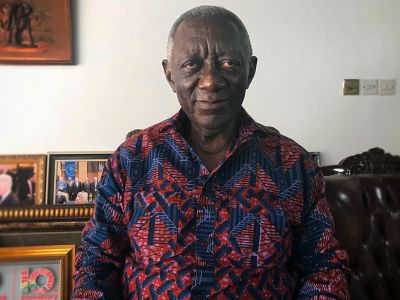
John Agyekum Kufuor was sworn into office as president of Ghana on 7th January 2001. He served two four year terms after winning re-election in 2004 until he stepped down on 7th January 2009. A lawyer by profession, Kufuor trained at the Oxford University in the UK and spent many years as a private businessman before eventually entering politics full time. During his time as president, he served as chairman of the African Union between 2007 and 2008.
Elizabeth Nsimadala is the Regional President of Eastern Africa Farmers Federation (EAFF) and Board Member of Pan Africa Farmers Organisation (PAFO) she is also the current chairperson of Uganda Cooperative College Tororo governing council in Uganda and the Coordinator CARITAS Cooperative Governing Council in Uganda.
Susanne Neubert, Director of the Centre for Rural Development (SLE). Strategic development in education, training, research and consultancy. Securing and supervising SLE overseas projects. PhD in agricultural economics and ecology with a regional specialisation in Africa.
Dr. Daniel Tsegai is a Programme Officer in charge of "Drought and Water Scarcity" Portfolio at the United Nations Convention to Combat Desertification (UNCCD) in Bonn, Germany.
Jes Weigelt is Head of Programmes at TMG Research gGmbH, the research wing of TMG. Töpfer, Müller, Gassner. ThinkTank for Sustainability. He tweets at @jes_tmg.
Marwa Shumo is an environment biotechnologist who obtained her undergraduate training at the University of Nizwa, Oman. Marwa is an expert on black soldier flies and their applications in livestock feed production and future food security.
Iris Manner is a media consultant at World Vision Germany. Frequent trips to Kenya have influenced her and she is therefore very interested in environmental and nature conservation as well as children’s and women's rights.
Maria Smentek is the communications officer in the Berlin office of the United Nations World Food Programme (WFP). WFP Berlin's communications efforts focus on humanitarian crises, development programmes and innovations in the fight against hunger.
Dr Michael Brüntrup is a senior researcher at the German Development Institute (DIE) in the field of Agricultural and Food Security with focus on sub-Saharan Africa
Wilane Paté Wilane Paté is a radio presenter and journalist in Abidjan, Ivory Coast. He was trained at the Studio-Ecole Mozaik – a school of journalism run in cooperation with forty partner radio stations throughout the country – and regularly presents current affairs programmes produced by Studio Mozaik.
Since 1988 Bettina Rühl, born in 1965, has been a radio and feature article writer specialising in Africa. She has been living in the Kenyan capital, Nairobi, since 2011. She has received several awards for her radio features, including the Prize for the Freedom and Future of the Media in 2012.
Dr. Pedro Morazán, born in Honduras, is an economist who has been working as a research assistant at SÜDWIND since 1992. During this time he has been in charge of numerous evaluations and partner consultations. He has also published various studies and expert reports for different organisations, including GIZ/BMZ.
Tilman Wörtz studied politics and economics in Erlangen, Paris and Mexico City. Since 2000 he has been working as a reporter for Zeitenspiegel Reportagen. He is interested in the economic and political development of countries in crisis.
Frank Brunner is a master of political science and a journalist. He works as an editor and writer for various daily newspapers in Berlin, and for Spiegel Online and Zeit Online. Later editor-in-chief in the science journalism department of W. Bertelsmann publishers. Currently a writer for Zeitenspiegel Reportagen and in the Baden-Württemberg office of stern.
Dr Marlis Lindecke heads GIZ’s Advisory Service on Agricultural Research for Development (BEAF) Programme, based in Bonn. On behalf of the German Federal Ministry for Economic Cooperation and Development (BMZ), she and her team manage the support to the international agricultural research centres of the global research partnership for a food-secure future (CGIAR), the World Vegetable Center (formerly AVRDC) and the International Centre of Insect Physiology and Ecology (icipe).
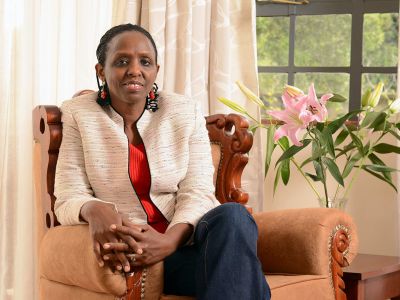
As President of AGRA, Dr. Agnes Kalibata leads the organization’s efforts with public and private partners to ensure a food secure and prosperous Africa through rapid, sustainable agricultural growth, improving the productivity and livelihoods of millions of smallholder farmers. Prior to joining AGRA in September 2014, Dr. Kalibata was Rwanda’s Minister of Agriculture and Animal Resources (MINAGRI).
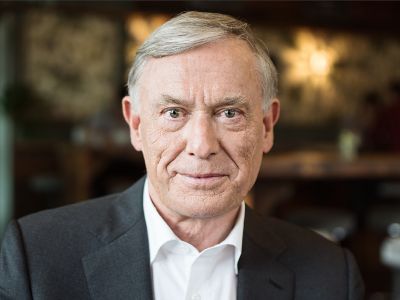
Prof. Dr. Horst Köhler served as President of Germany from 2004 to 2010. Prior to that, he was Secretary of State in the Federal Ministry of Finance, President of the Deutscher Sparkassen- und Giroverband and the European Bank for Reconstruction and Development and Managing Director of the IMF.
Lutz Hartmann studied law in Jura in Mainz, Freiburg and Paris. He is a founding partner of Belmont / Legal and admitted to the bar in both Frankfurt and Paris.
In 2000 Gisbert Dreyer founded the Dreyer Stiftung that is is active in Burkina Faso. Since 2011 he is the honaray consul for the Free States of Bavaria and Saxonia in Burkina Faso.
Prof Dr Joachim studied agricultural sciences and currently heads the Center’s Department for Economic and Technological Change. He became Vice-President of the German NGO Welthungerhilfe in 2012.
Professor Helmut Asche is an economist and sociologist. From 1985 to 1998 he worked as an economic advisor for GTZ. Until 2016 he taught as an honorary professor at the Department of Anthropology and African studies, University of Mainz.
Dr Iris Schöninger is Senior Advisor for development policy at Welthungerhilfe in Bonn. She is an expert in value chains and business-related projects in the context of food security.
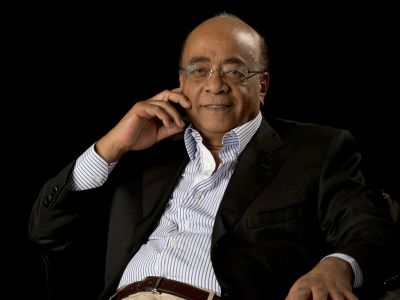
Dr Ibrahim is the Founder and Chair of the Mo Ibrahim Foundation which he established in 2006 to support good governance and exceptional leadership on the African continent.
Christiane Grefe, born in 1957, attended the German School of Journalism in Munich and studied politics. She works as an editor and reporter in the Berlin editorial office of ZEIT.
Stig Tanzmann is a farmer and agricultural scientist and has been working as a consultant for agricultural issues at Brot für die Welt - Evangelical Developmental Service since 2010.
Dr. Heike Baumüller is a Senior Researcher at the Center for Development Research (ZEF), University of Bonn, operates and coordinates the accompanying research for agricultural innovation (PARI).
Professor Klaus Töpfer, a graduate economist, was Executive Director of the Institute for Advanced Sustainability Studies (IASS) in Potsdam from 2009 to 2015.
Dr. Andreas Quiring has been Director of the Andreas Hermes Akademie (AHA) since 2008 in the educational center of the German agriculture e.V.. In this function, he is responsible for the education work of the AHA, which since 1949 has been accompanying people and organizations in the agrarian sector in development and change processes.
Alexander Müller, a graduate sociologist, is the head of a global study of the UN Environment Program on "The Economics of Ecosystems and Biodiversity for Agriculture and Food" and CEO of "TMG - Töpfer, Müller, Gaßner GmbH, ThinkTankforSustainabilty".
Since April 2013, Jenny Walther-Thoß has been responsible at the WWF for sustainable biomass use, i.e. the energetic, material and technical use of biomass. After studying agricultural sciences in Berlin, she started working as a freelance auditor in the field of bio-control and as a research assistant (focus on regional development) in the FG Resource Economy at HU.